
a ritual soup
for Father's Day and for Spring

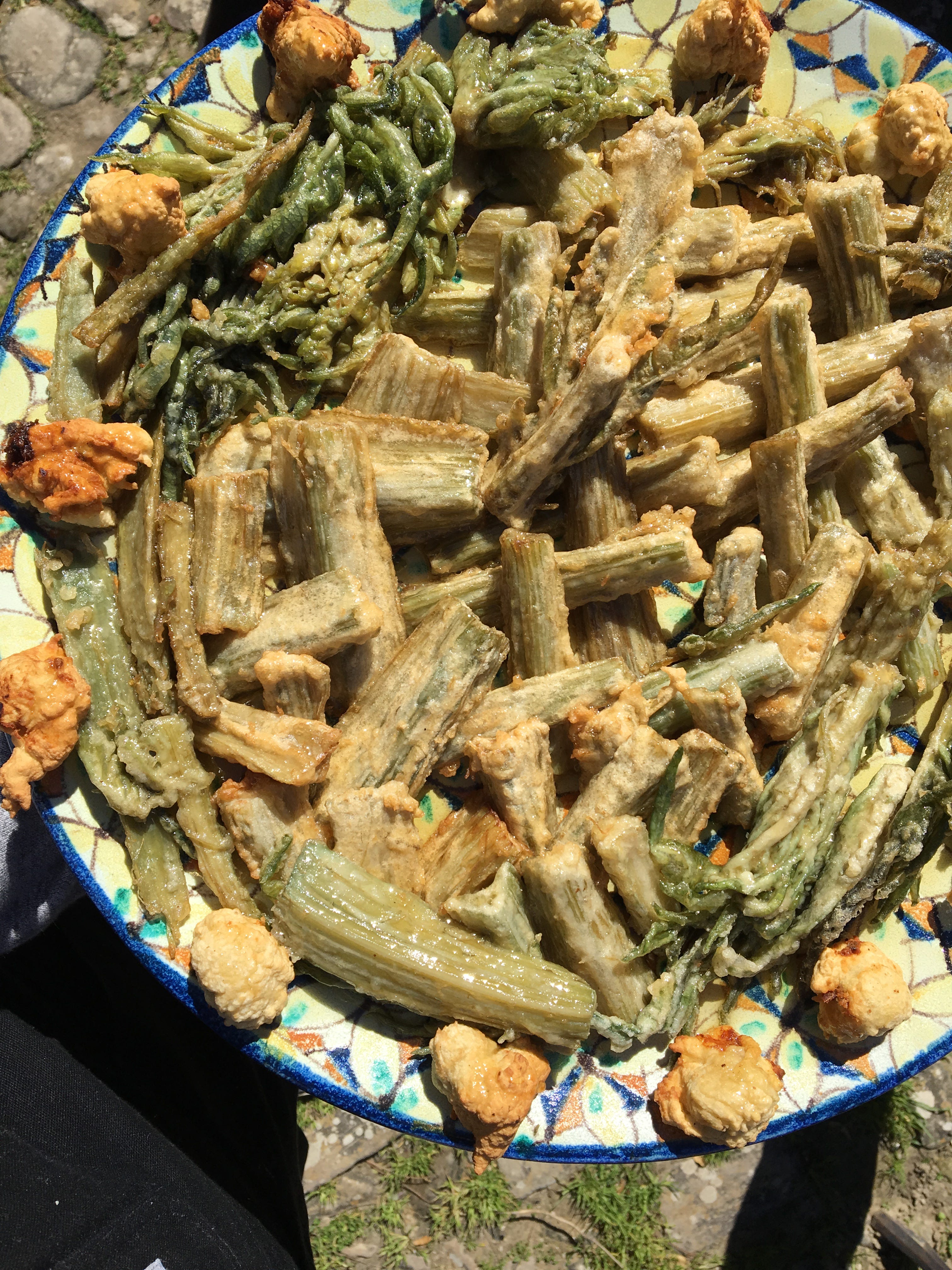
In the Catholic calendar the 19th of March is the Feast of Saint Joseph, husband of Mary; in Italy it is also, in recognition of the rather fluid parentage of divinities, Father’s Day. Patron of workers and of the sick and the dying, Joseph is particularly venerated in Sicily, where his intercession is supposed to have brought the rain that broke the drought that made the broad beans grow that prevented a medieval famine; I find it funny in a blasphemous sort of way that an island where cornuto1 is the default insult has such regard for this cuckolded but devoted stepfather. He is celebrated, as is fitting for Lent and for the poverty of Jesus, with a feast of good but poor things - little puffs of fried dough, cardoon fritters, grains and fava beans.
March 19th is also nearly the spring equinox in the Northern Hemisphere and many of the Sicilian venerations have something older and more pagan about them, marking this turning point of the year; three-tiered altars piled high with breads left in sacrifice to the saint to be distributed ultimately to the poor, elaborately shaped and woven to resemble figures, sheafs of wheat, hands, ladders, with baskets of fruits and vegetables, the first harvest of the new season rubbing up with the stored produce of the last. In particular in Sicily they make the maccu or minestra di San Giuseppe, a soup that is also a spell - Mary Taylor Simeti calls it a propitiatory ritual2, an attempt to guarantee this year’s harvest through a deliberate sacrifice of the last. It is a soup that embodies the particular Christian quality of recklessness, of putting one’s faith in Providence, an act of lavish poverty.
