
6.5.25

in the soil
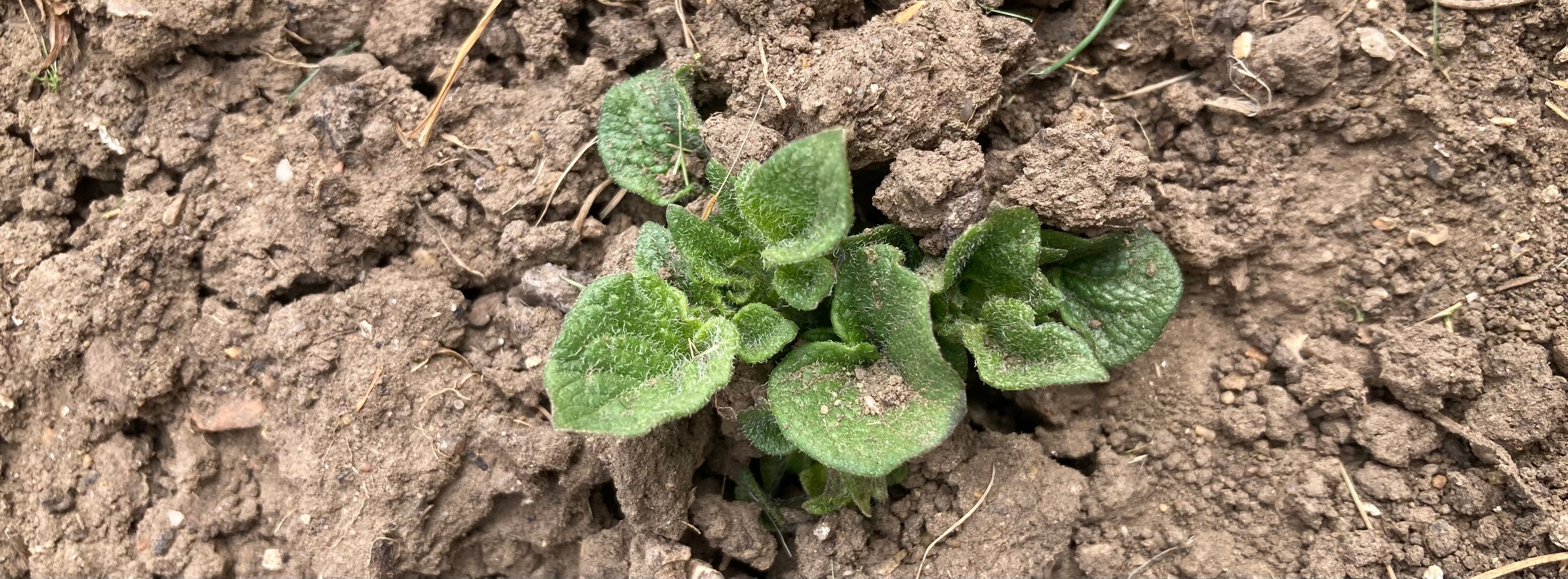
Entirely as expected the asparagus which last week was too small to bother with has leapt up about a foot, far too large to cut, the tight immature spear-tips already unfolding into the fern they will soon be and so nothing to harvest again, I think, poking around inside the canopy of the artichoke in case there is any sign of the smallest of flowers (there is not), but this is not quite true. There are still nettles to be picked small and tender enough to just-blanch before eating, the last week probably, their cascades of flowers beginning to form as the leaves below get larger and hairier; with scissors I cut a small bunch of the agretti I have been swamping every week with water and a few stalks of lovage, a few of wild fennel, fish in mind. It has got cold again, the wind howling again and not sunny, but the potatoes that are almost poking through will just have to take their chances, surely we will not have frost in May. This is the first time I have seen them at just this stage, you can see how they crack the earth (sunbaked somewhat after a hot week) as they push their way out of it, the strength of the things.
in the kitchen
For May Day and my monthly fermentation workshop at the local community gardens we make nettle miso, continuing my nettle fixation for the season and adding another item to the list of things I can do with them. I haven't tried making miso for ages for the slightly silly reason that if I am going to make it from scratch I feel I ought to inoculate the koji myself rather than buying it, which as I don't have the equipment or time necessary to do so has never happened. I did try making a miso with end-of-season fresh broad beans a few years back which was a damp and mouldy disaster – in years past (quite some years past now) I have made some with various British pulses from Hodmedod's, a good dark red one I left for ages. A video by Kenji Morimoto of Jerusalem artichoke miso, informing viewers that you could use various fruits and vegetables instead of the pulses in miso, came up on my feed at the same time I was thinking a lot about nettles and read that they have quite a high protein content as green vegetables go and so would (I assume) work well. I await the results! Because of this workshop and some other projects I have going I have been getting back into the wider world of fermentation aside from just sauerkrauts and so on, a colleague gave me a bit of her kombucha SCOBY which I have been slowly waking up from its hibernation, I think I will try a batch with (yes) nettle tea.
on the page
It is quite sad, reading Kropotkin's The Conquest of Bread, seeing the absolute certainty he had or professed to have that revolution was right around the corner, the equal certainty that if the current social order was not replaced by one based on anarchist principles then the revolution would be drowned in blood; more than that, seeing the certainty of the nineteenth century that the world would get better, and continue to do so, science and technology enabling ever-greater social progress. A Mouchot of the future will invent a machine to guide the rays of the sun and make them work, so that we shall no longer seek sun-heat stored in coal in the depths of the earth, he asserts, the first part of which is true, for all the good it has done us. There is necessarily something dated about the book, and the Penguin Classics' use of the 1913 English text rather than, say, a more modern translation, with its careful and pedantic lists in pounds, shillings and pence, its exhaustive yet somehow off-hand examination of how many oxen and chickens an anarchist commune might be expected to consume in a year, gives the whole thing an impression of harmless crankery, of an eccentric aristocratic dilettantism (and he was a prince) – the last gasp of the Victorian gentleman amateur in pre-war Europe. Then again he says something like this, that they will experiment the watering of the soil with cultures of micro-organisms – a rational idea, conceived but yesterday, which will permit us to give to the soil those little living beings, necessary to feed the rootlets, to decompose and assimilate the component parts of the soil, and you see in how many ways Kropotkin's concerns are the concerns of now.