
29.4.25

in the soil
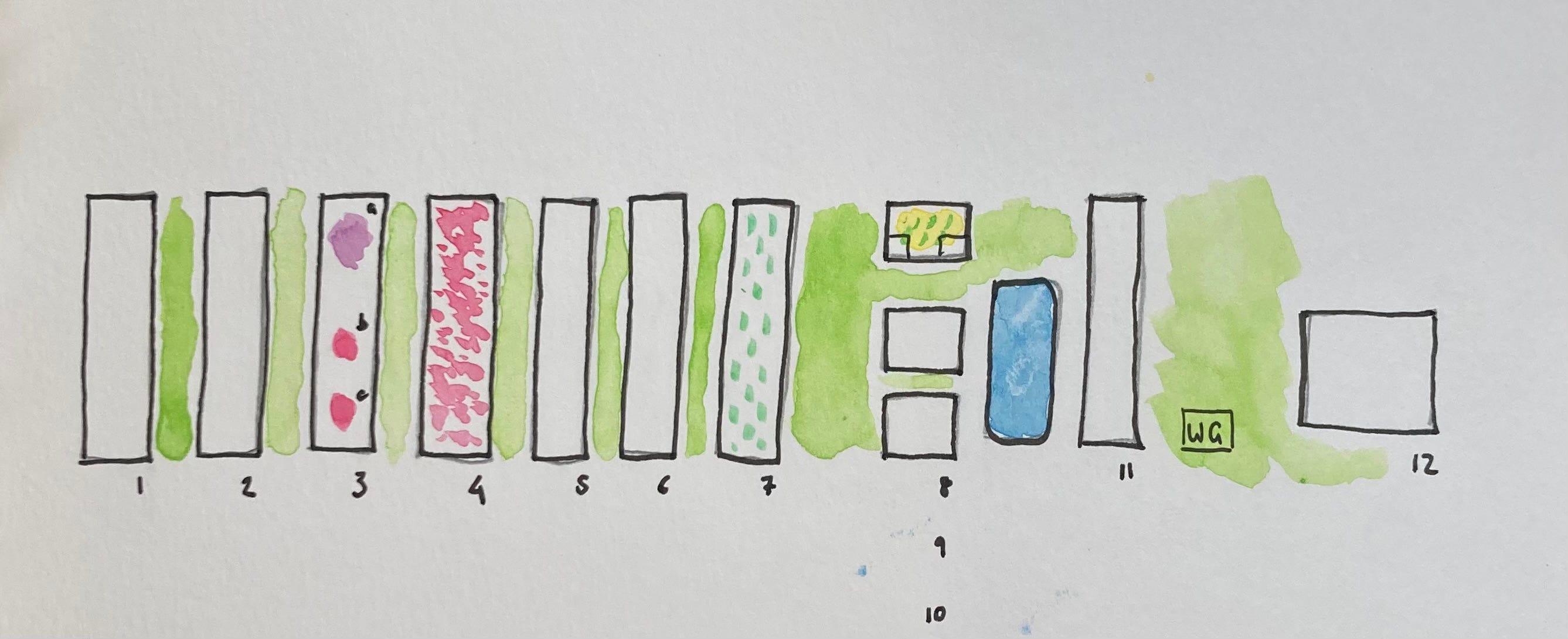
For what reason I don't understand but surely for some reason the north side of my plot, which runs down from the hedge at the eastern side of the allotment site, has never been as fertile as the south side – a difference of a few feet. At one end the raspberry canes I transplanted last year are thick and green and two foot high on the south side, just coming up among the weeds and the woodchip on the north; at the other end the whitecurrant to the north which has been on my plot since before I took it over is dwarfed by a jostaberry which went in as a twig two years ago. The hazelnut is on the north side – is there some root running straight from that up to the hedge and taking all of the energy, all of the nutrients from other plants? Some tangle of bramble beneath the earth? I would like to look down into the circulation of the soil and see what is going on down there, the invisible battles and the even-more-invisible collaborations, acts of mutual aid between different plants and fungi and bugs, seeing only the sunlit portion of the earth is really to look at it cross-eyed, through a glass, darkly. Oddly enough my asparagus, which my mother is convinced is suffering from its presumed battles with the artichoke next door, is coming up late but almost exactly evenly to the north and to the south, a couple of inches on each side; still nothing to harvest for now except the weeds.
in the kitchen
Now that it's actually hot and for a few days consistently so rather than grey-one-day-sunny-the-next it is ice-cream season! If there is one thing I miss and appreciate about Italian food culture (especially in the south) it is that there ices are a year-round treat, an all-day treat, an all-ages treat – to get up on a hot morning and have a brioche with almond granita for breakfast is normal and desirable, to take a cone of pistachio gelato for an evening stroll is normal and desirable. My favourite ice-cream shop in town closed last year in tragic circumstances but we are at work still sandwiched between two as well as all the Mr Whippy machines you'd expect by the seaside and so far this season I have had:
pistachio (a little too sweet for me)
the Easter Bunny's Favourite (fior di latte with mini eggs in it, exceptional)
matcha (I just don't think I like matcha)
chocolate (really good)
as well as various soft serves.
Also we make ice-cream at work of course, a scoop of lemon with a rum babá, a pomegranate granita, something like pine nut and rosemary caramel from the La Grotta book that a colleague makes for a laugh that is very good. This week a friend is cooking a menu of Korean seafood dishes at a place in town, one of them a plate of raw bass and raw scallops and winter tomatoes in a jumble with a scoop of tomato and chilli granita which only just melts as you mix it all together, sour and sweet and fresh and cold.
on the page
I don't believe in the universe trying to tell me something or anything like that but it is true that sometimes what you read or watch or talk about does seem to converge in strange ways and force on you something to think about. In Permaculture magazine, for example, I read about a farm somewhere in Britain that operates as a commune and comes to decisions via a consensus method, where instead of a vote with a winner and a loser suggestions are made until one is found that everyone can agree on; individuals can choose to stand aside from decisions they don't personally want to be a part of but don't see the need to block, or in extreme cases can veto those that seem inimical to the aims and needs of the farm as a whole. Interesting, I thought, and then reading a pamphlet about the Quakers discovered that they use exactly the same process at their Meetings; David Graeber's Fragments of an Anarchist Anthropology, which asks us to look at non-Western and non-capitalist ways of being in order to broaden the imaginative possibilities of what freedom might look like, explains that the consensus method is common in anarchist groups, was adopted from the Quakers, and is popularly supposed to have derived originally from Native American society, whoever exactly is meant by that. It is certainly hard to look about and conclude that our current model of democratic society is the best we could be aiming for.
anarchy is much misunderstood, as I'm sure you know, Thom. No rules are needed because everyone behaves rightly and properly towards each other. Simple, really - which presumably is the problem.
Sometimes the Universe just gives you an unexpected helping of your favourite things, vicarious ices and thoughts on anarchy, and all that you need is gratitude. I have been wondering myself about whether matcha is like coriander and it's down to genetics if you taste something delicious or not.