
28.5.24

in the soil
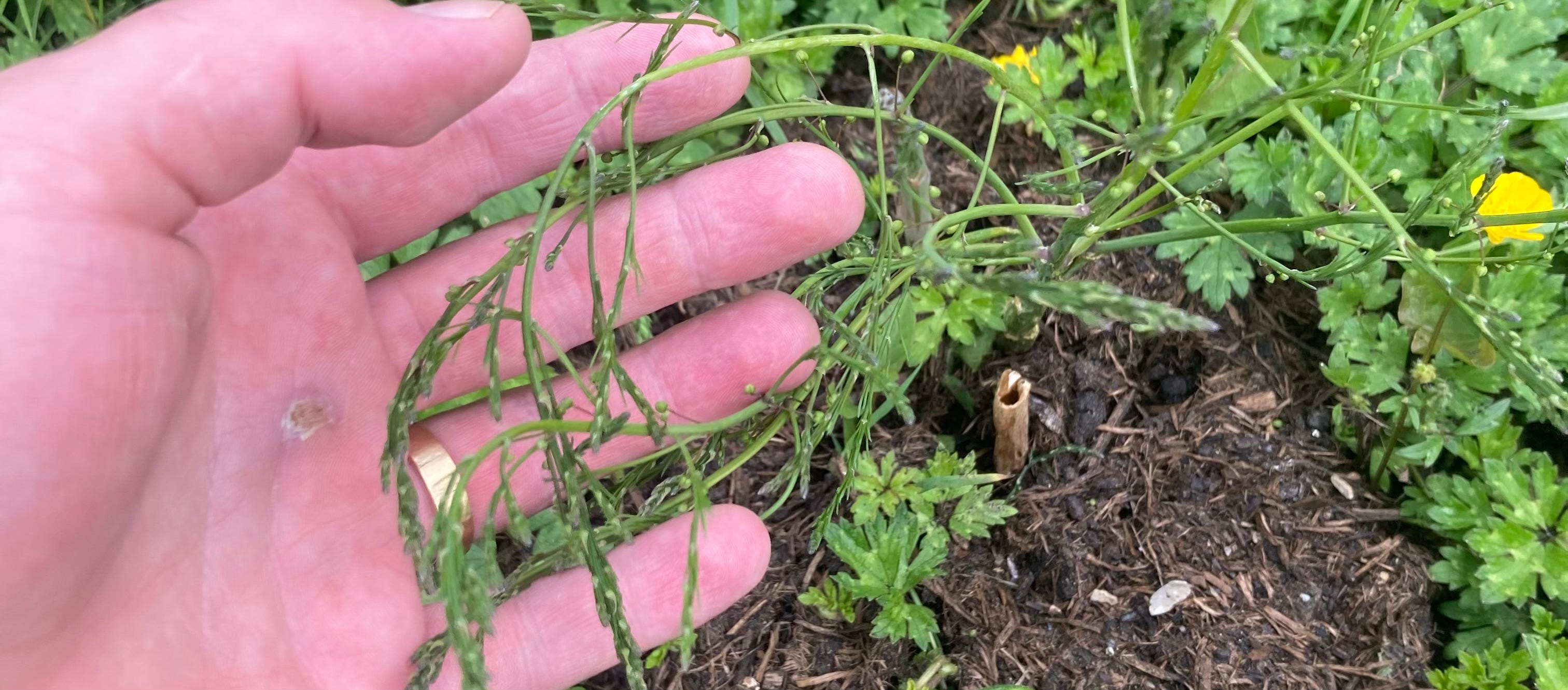
Plants are instructive to spend time with because they are not constrained by our notions as to how bodies should behave, the you and me, the self inviolate. When I give the coppiced hazel its yearly trim, fresh growth still on severed wood, when the bramble transforms its branches into clenched fists to clutch and re-root in the soil, when each year the rhubarb, the lovage, cardoon die back to nothing above the earth, split and clone themselves below, when the asparagus breaks its neat spears into twisting hydra-heads, festoons itself with berries – how strange, I think, the life of plants – but really it is us who are strange, the aberrations, the idea of being a plant far older than the idea of being a person, and us who have traded what this planet has to offer of immortality for what – some sense of self? The consolation of edges, of borders?
in the kitchen
I am interested in the idea of preserving not just in the form of pickling and fermenting gluts of cucumbers, turnips, tomatoes, cabbages – spreading the bounty of one season around throughout the year to make viable the business of hacking food out of the soil – but as a way of capturing vagrant flavours we might not otherwise experience. Nobody needs practically to make elderflower cordial or champagne, it is not reducible as beer or wine to a vehicle for easily consumed and shelf-stable calories; you make it because it is pleasant, at half a year’s distance, to drink it and to see again the off-white blossom in the May sun, it is a pleasure of uselessness. In fact it is more than useless, if you pick elderflowers for cordial you will not get elderberries for wine, if you pick green walnuts for nocino you will have no nuts for the kitchen or the table, it is an assertion of pleasure in the face of the useful.
on the page
I am reading Ask The Fellows Who Cut The Hay which I thought I had read before but which if so I had managed to entirely forget, a fascinating if nostalgia-filled account of a vanishing or vanished way of life in rural Suffolk, captured in the 1950s from the memories of the oldest of the population. The paperback edition I have is the bright golden yellow of a long September day or a bright harvest moon which suits I think the mood of the book perfectly – or perhaps I bring this yellow mood with me when I read a chapter or two before bed.