
27.5.25

in the soil
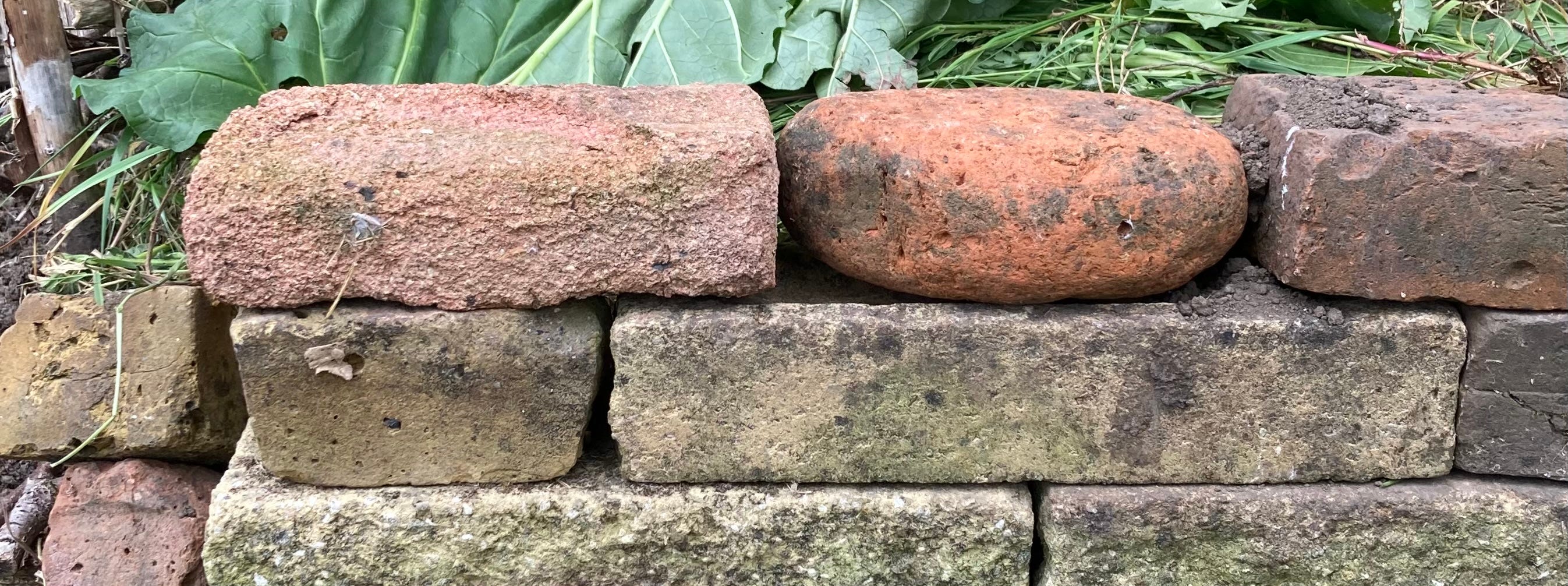
The Sunday just gone (I read) would have been the traditional occasion for beating the bounds, the yearly practice of walking the edges of the village or parish and beating with spring branches the boundary stones or other landmarks so as to keep fresh in the collective memory a mental map of the place, prevent the encroachment of one neighbour upon another, at the same time to bless the land within for the year to come; while no longer exactly necessary, this is still practiced in various places. It crosses my mind to cut a switch from my hazel and beat the borders of the allotment but in the event I am too self-conscious to do it. In any case the only really defined border I have is that between my half-plot and my neighbour's half-plot, which is marked not so much by the poles and canes whose joining string has now mostly fallen down as by the exact lines where her neatly dug soil stops and my brambles begin, or where behind my herb bed she has not had time to pull and dig out all of the horseradish, which is coming up at the moment in huge trowels of green. As it turns out I do spend most of the day marking edges, strimming away the line of raspberry canes which is creeping up from where I dug them out last year up towards their new bed at the top of the plot (a coincidence or doo they know their destination?), laying down canes and old cardoon stalks to mark out the limits of where I will let grass grow, building a little brick wall to keep the compost from spilling everywhere.
in the kitchen
In Sicily where tuna is a highly prized fish with its own traditions of capture, slaughter and butchery as well as preparation for the table (I am not going to describe the mattanza here but it is worth reading about if you are interested in such things and not squeamish) they make a pasta sauce by simply putting a tuna head in a massive pot of tomato sauce (tuna heads being themselves massive) and letting it cook very gently until you have a richly flavoured tuna sugo, what they would call a gravy in Italian-American, in both cases the sauce precious enough to serve entirely separately from the meat cooked in it, with only the flavour remaining; I've never been able to get any fresh tuna here apart from vac-packed pieces of fillet and so have never tried making this. Surely, though, I thought, with six mackerel heads in the fridge, surely other oily ("blue") fish would work as well – mackerel might be cheap next to tuna but good tinned mackerel is just as good as good tinned tuna. I fried the heads in olive oil and added garlic and chilli and tipped in two jars of passata and cooked the lot for long enough for the heads to fall apart – passed the lot through a sieve to get all the head juices out – was it nice? Yes. Did it taste markedly rich and fishy? Not really. Probably still good for the brain, I tell myself, and certainly not a waste of anything.
on the page
I started reading Richard Mabey's latest book The Accidental Garden just in time to learn the above fact about beating the bounds and the old church calendar, it is always pleasant even if you tell yourself it might be silly to feel that you are reading the book at the right time. It is an account of the shared garden at his house in rural Norfolk – shared with his partner, who takes care of the useful vegetable-growing side of things, but also very much shared with the local birds, mammals, insects, the plants and lichen and fungi themselves. I'm not very far into the book but I am enjoying even the familiar ground of it as Mabey looks back at a lifetime of ecological thinking and wrestles with the problem of how to garden – an artificial in the sense of human activity – in a natural way. Rewilding, conservation, rip-it-up-and-start-again; a path is picked through these absolutes. He does note that perhaps the best in terms of most biodiverse land use in this country was the long-gone commons, land loosely managed for a variety of purposes – grazing livestock, firewood, hay, autumn fruit – supporting a corresponding variety of life, another victim of the vile disease of borders.