
20.3.26

in the soil
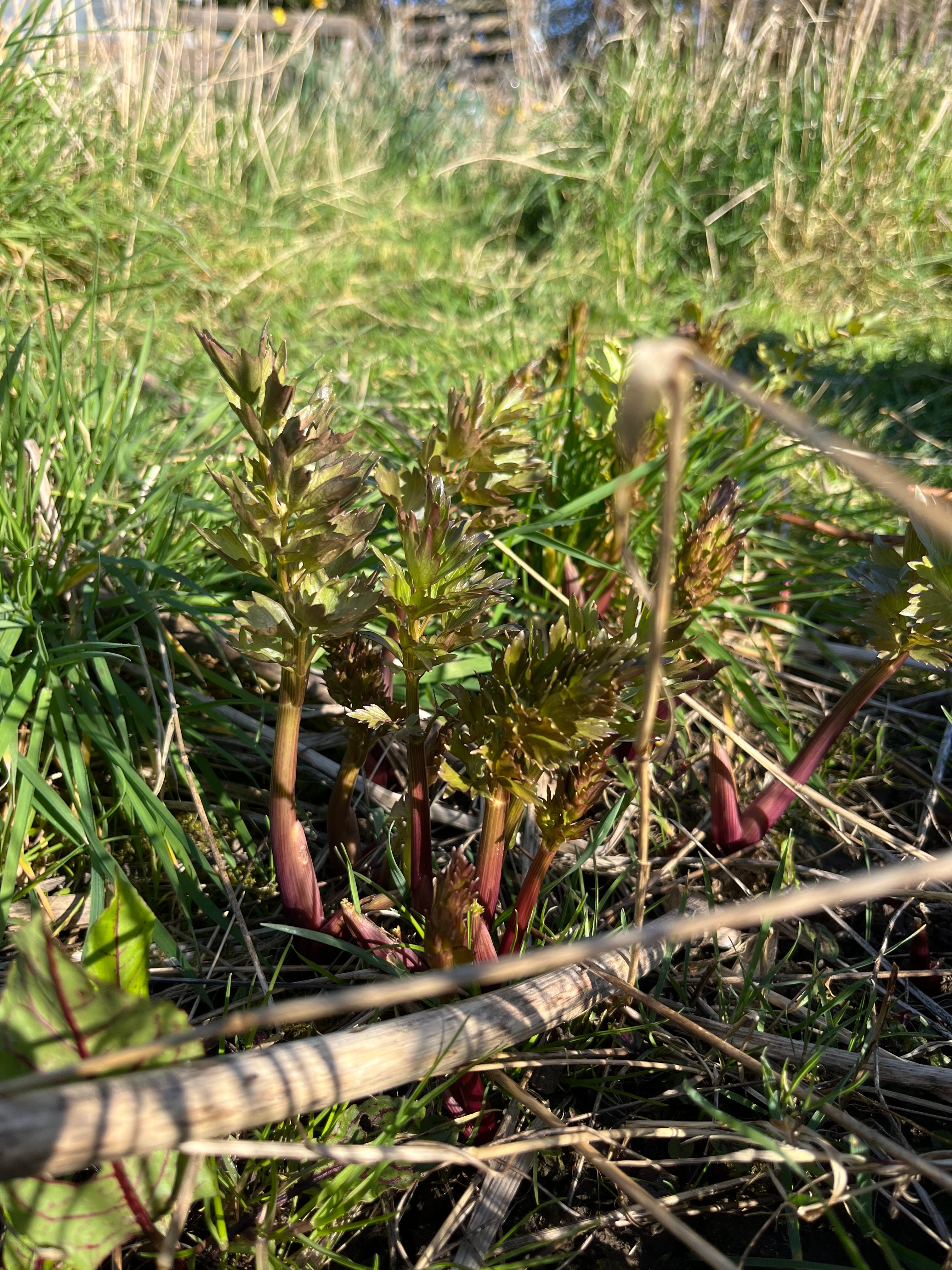
After weeks and months of dormancy suddenly there is so much to do - and for the time being not much to show for it. The grass needs cutting and is finally dry enough to do so; the weeds encroaching from the hedgerows and the grassy spaces between beds are threatening to overrun the plants I am trying to grow; the framework holding the bramble vaguely in place needs remaking, their shoots need tying in, the compost bins need rebuilding, the hazel should have been pruned weeks ago, the patches of earth left fallow over winter now look at me accusingly, ready for turning, to take in new life. Meanwhile the idea of any actual crop is still far off; my wild garlic patch probably needs leaving for another year, and the broad beans which will make the first harvest have yet to even flower. A corner of the sheet of corrugated plastic that has been lying around on the plot since I dried my garlic and onions on it last summer has blown on top of the asparagus bed, and underneath it (sadly somewhat corroded by slugs) two spears of white asparagus have forced themselves up into the dark. Still, nothing seems like a chore when it is warm and when the air smells like this, full of blossom and grass and herbs, when each plant is full enough of life that knocking or kneeling upon one brings up a great heady scent, intoxicating.
in the kitchen
The other week the first crop of nettles - just a tiny bag of shoots - were cooked as planned as creamed nettles to go with a roast chicken, a favourite preparation of greens; just blanch them and then sauté in butter, stir in flour to make a roux, add milk and cream and season with nutmeg as well as salt and black pepper, something between a sauce (in flavour and texture it is not unlike traditional bread sauce) and a side. The chicken was rubbed with rosemary salt, chilli, oregano and lemon zest and roasted on a wire rack over a tray of thickly sliced potatoes with a slick of olive oil until the skin was crispy and the legs pulled away from the body and the potatoes were swimming in chicken juices, browned on top and fudgey underneath; as well as the nettles we had a salad of mixed leaves (heavy on the mustard) from the community gardens. There weren’t quite as many leftovers as I had planned but the bones and skin and bits went into a pot with the usual suspects to make a broth, some of which we froze in an ice cube tray and some of which I made into a soup with thinly sliced leeks and carrots and barley and the leftover chicken, somewhere between a cock-a-leekie and a soup we had once in the Sudtirol of chicken broth and barley and diced carrot and nothing else, perfect for the somewhere-between season we have just left.
on the page
Although I am still trying to read my way through books that I already own rather than acquire any new ones I was lent a couple of proofs to look at, of Rebecca Parry’s May We Feed The King and Rebecca Tamás’ The Book of Mysteries, both of which I had been eagerly anticipating. The first is a strange, elliptical sort of historical novel, shifting between a present day Curator of the displays of food and homewares you get in the museums of castles and stately homes and a presumably-medieval king, a reluctant and improbable (third son, no other heirs) ruler of a realm unnamed and not clearly defined. In fact few of the broader strokes of the book are clearly defined, its characters known only by their titles or job descriptions, the tragedy which has befallen the Curator not clearly spelled out; instead it accumulates itself in fine detail, like the exact prices and construction of the plastic foodstuffs the Curator decorates her sets with. Tamás’ book is marvellous, an attempt to restructure a modern life around something more fundamental than the clock time of 9-5 we have burdened ourselves with, its collision of ancient religion and modern paganism with radical politics and ecological thinking a natural continuation of her essays in Strangers. A slightly off-kilter trip through the calendar, dealing also with the shock of grief, it was hard not to think of it in productive conversation with The Allotment Diaries; several times while reading it I wished I could revisit and rewrite my own book in light of new thoughts, but of course that ship has sailed.