
13.8.24

in the soil
The seemingly endless rain of the earlier summer given way to stifling heat has made of the earth – so often in August baked to a hard crust – the fine tilth that all the books recommend, and digging it over to get ready for the greens and alliums of winter a pleasure; the rain and the heat too have raised the brambles to absurd proportions, their tendrils stretching from the hedgerow ten feet into the air, their fruit swollen sweet and inky, the pop of the juice in the mouth sun-warm, wine-dark. The cucumbers that survived the slugs have produced so far two little pickle-sized fruit, and everywhere else the plot is in flower, the artichokes and cardoons in vivid thistly purple, white flashes of borlotti, fragrant yellow fennel, oregano nearly ready for harvest. Two plots over the archaeologist’s sunflowers loom absurdly tall, twice as high as anything around them.
in the kitchen
The berries I picked last week are still sitting in the fridge awaiting a purpose and I do not quite know what to do with them; three or four years ago I made a bramble ketchup which then sat itself in the fridge until a few weeks ago when we took it to a barbecue and (apparently) ruined other ketchup for everyone but in my experience when I try to make something from memory it never turns out as well as it did when I made it the first time, by instinct, which is why I should take notes on everything and never do. A pie would be nice, if it wasn’t too hot to turn the oven on.
on the page
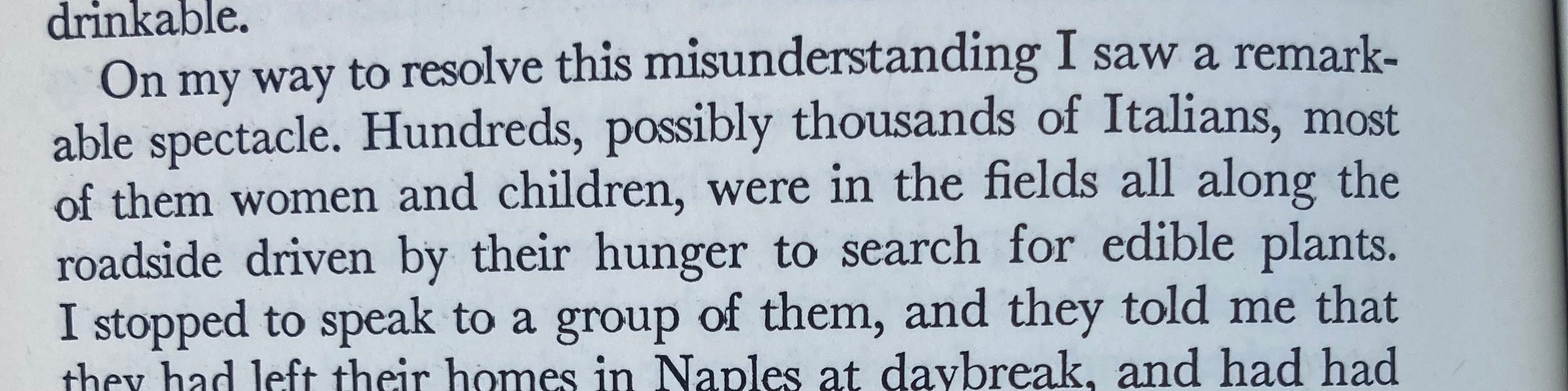
Norman Lewis’ Naples ’44 is a fascinating and (considering its subject matter) very funny account of the titular city in the titular year, beaten down by Fascist and by Nazi rule, badly damaged in its liberation by Allied bombing, the corruption and looting of an occupying power mingling with the city’s own tendencies towards petty and organised crime, insubordination, the traditions of omerta and pantomime combining in a grand display of malicious compliance towards what is after all only the very latest in a series of foreign powers attempting to oppose their will on the population. Food or rather the lack of it is a frequent topic, and it is a welcome corrective to a lot of writing on the south of Italy to show the seasonal foraging and hunting of wild food – dandelions and other bitter greens, mushrooms, migratory songbirds, lake-dwelling frogs, urban cats, not in a romantic light but for what it so often is, the last resort of a people who are starving.